Understanding Protein: Structure and Function

A comprehensive exploration of protein's role in human physiology

What is Protein?

Proteins are complex organic molecules composed of amino acids arranged in specific sequences. Amino acids are organic compounds that link together through peptide bonds to form proteins. The human body uses approximately 20 different amino acids, of which 9 are considered essential, meaning the body cannot synthesize them and must obtain them through diet.

Proteins exist in countless varieties throughout nature, each with a unique structure and function. The specific arrangement of amino acids determines the protein's characteristics and biological role.
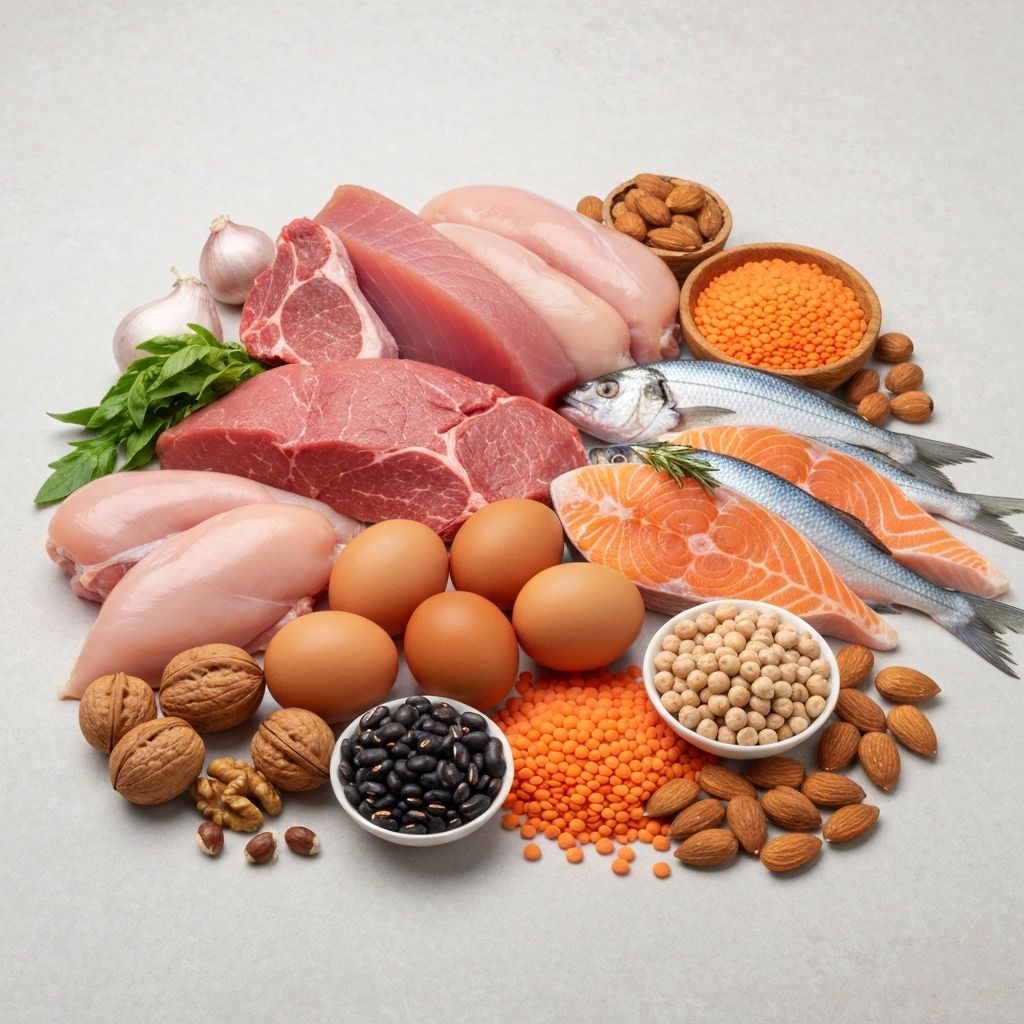
Various high protein food sources including fish, eggs, and legumes

Essential Amino Acids

The nine essential amino acids cannot be manufactured by the human body and must be consumed through food:

Histidine

Important for immune function, oxygen transport, and histamine production. Particularly important during periods of growth.

Isoleucine

Supports muscle metabolism and energy regulation. Part of the branched-chain amino acid group.

Leucine

Involved in muscle protein synthesis and metabolic regulation. A key branched-chain amino acid.

Lysine

Important for bone health, collagen formation, and immune response. Necessary for calcium absorption.

Methionine

Contains sulfur and supports detoxification processes. Involved in mood regulation.

Phenylalanine

Precursor to neurotransmitters. Important for mood, motivation, and cognitive function.

Threonine

Supports immune function and collagen production. Involved in protein synthesis.

Tryptophan

Precursor to serotonin. Important for mood, sleep regulation, and stress response.

Valine

A branched-chain amino acid supporting muscle health and energy metabolism.

Functions of Proteins in the Body

Proteins serve numerous critical functions beyond serving as a nutrient source:

Structural Functions

Enzymatic Functions

Regulatory Functions

Immune Functions

Transport and Storage

Energy Production

Types of Proteins

Complete vs. Incomplete Proteins

Complete proteins contain all nine essential amino acids in adequate amounts. These include most animal-based proteins such as meat, fish, eggs, and dairy. Some plant-based sources, particularly soy, are also complete proteins.

Incomplete proteins lack sufficient amounts of one or more essential amino acids. Many plant-based proteins fall into this category. However, combining incomplete proteins (such as grains with legumes) can provide a complete amino acid profile.

Animal-Based Protein Sources

Plant-Based Protein Sources

Protein Digestion and Absorption

The body has sophisticated systems for breaking down proteins and absorbing their amino acids:

Digestion Process

Factors Affecting Protein Absorption

Protein Synthesis and Utilization

Once absorbed, amino acids are used to build and repair body proteins through a process called protein synthesis:

Protein Distribution Across Food Groups

Food Category Common Sources Typical Protein Content Additional Nutrients
Meat/Poultry Beef, chicken, turkey, pork 25-35g per 3.5 oz serving Iron, B vitamins, zinc
Fish Salmon, tuna, cod, mackerel 20-30g per 3.5 oz serving Omega-3 fatty acids, vitamin D, selenium
Eggs Whole egg, egg whites 6g per egg Choline, lutein, selenium
Dairy Milk, yogurt, cheese 7-8g per cup milk Calcium, vitamin D, probiotics (yogurt)
Legumes Beans, lentils, chickpeas 15-20g per cooked cup Fiber, iron, magnesium
Grains Wheat, rice, oats, quinoa 3-8g per cup cooked Fiber, B vitamins, magnesium
Nuts/Seeds Almonds, peanuts, sunflower seeds 4-8g per ounce Healthy fats, vitamin E, magnesium

Related Topics

For additional nutritional information, explore these related areas:

Information Disclaimer: This content is educational and explains general concepts about protein function and sources. It does not constitute medical or nutritional advice. For personalized dietary guidance, consult qualified healthcare professionals or registered dietitians.